
Fractional COO: Role, Cost, and When to Hire One
A Fractional COO brings senior operational leadership without a full-time hire. Here's what the role covers, what it costs, and how to know if you need one.
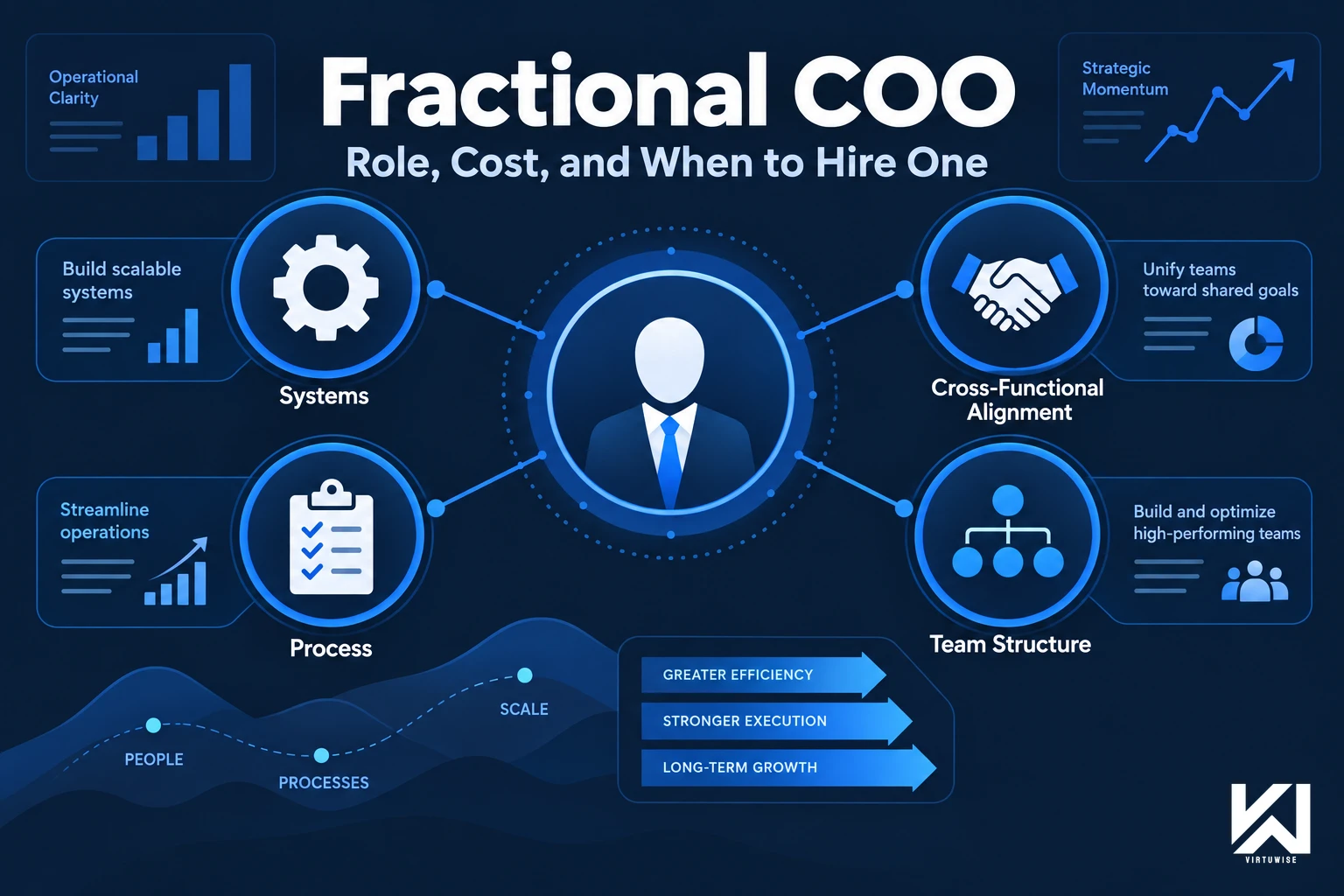
Growth-stage companies hit a specific, recognizable wall: the strategy is sound, the product works, but execution keeps slipping through the cracks between departments. Nobody owns turning plans into repeatable systems. A Fractional COO exists specifically to close that gap — without the multi-month search and full-time cost of a permanent COO hire.
This guide covers what a Fractional COO actually does, what fractional COO services typically include, what the role costs compared to a full-time hire, and how to know when it's the right call.
What Is a Fractional COO?
A Fractional COO is an experienced operations executive who takes on the Chief Operating Officer function — building operational systems, aligning teams cross-functionally, and turning strategy into repeatable execution — on a part-time basis rather than as a full-time hire.
The mandate is the same as a full-time COO's: operational execution, not strategy-setting alone. Where a CEO sets direction and a fractional CMO or CGO focuses on growth and revenue, a Fractional COO owns whether the organization can actually execute against that direction reliably, day after day.
What Does a Fractional COO Do?
Building operational infrastructure
Designing the systems, workflows, and reporting structures a growing company needs but hasn't built yet — often because the founder has been running operations informally, out of necessity rather than choice.
Cross-functional alignment
Sales, marketing, product, and operations often develop their own priorities and metrics with no one responsible for whether they actually fit together. A Fractional COO's job is making sure they do — resolving the friction that shows up as missed handoffs, duplicated work, and conflicting priorities.
Hiring and team structure oversight
Advising on organizational structure and hiring priorities as the company scales, often bringing pattern recognition from having built operations at similar-stage companies before.
Vendor and partner management
Owning key vendor relationships, contracts, and partnerships that consume founder time disproportionate to their strategic weight — freeing leadership to focus on decisions only they can make.
Operational reporting to the board or founder
Translating operational health into language a board or CEO actually needs — what's working, what's at risk, and what needs resourcing — rather than a status update with no clear signal.
Fractional COO Services: What's Typically Included
A fractional COO engagement varies by scope, but typically covers:
- Operational audit and process design — mapping current-state operations, identifying the bottlenecks actually limiting growth, and designing the systems to fix them
- Cross-functional leadership — running the alignment work between departments that otherwise falls to an overloaded founder or gets skipped entirely
- Team and hiring process oversight — structuring the org and hiring pipeline as headcount grows
- Vendor and partner management — owning relationships and contracts that need senior judgment but not full-time attention
- Operational reporting — regular, structured updates to the founder or board on operational health
Some engagements focus narrowly on one operational bottleneck (fixing a specific broken process); others take broader cross-functional ownership. Scope should be defined explicitly before the engagement starts, not discovered halfway through it.
How Much Does a Fractional COO Cost?
| Role | Typical Compensation |
|---|---|
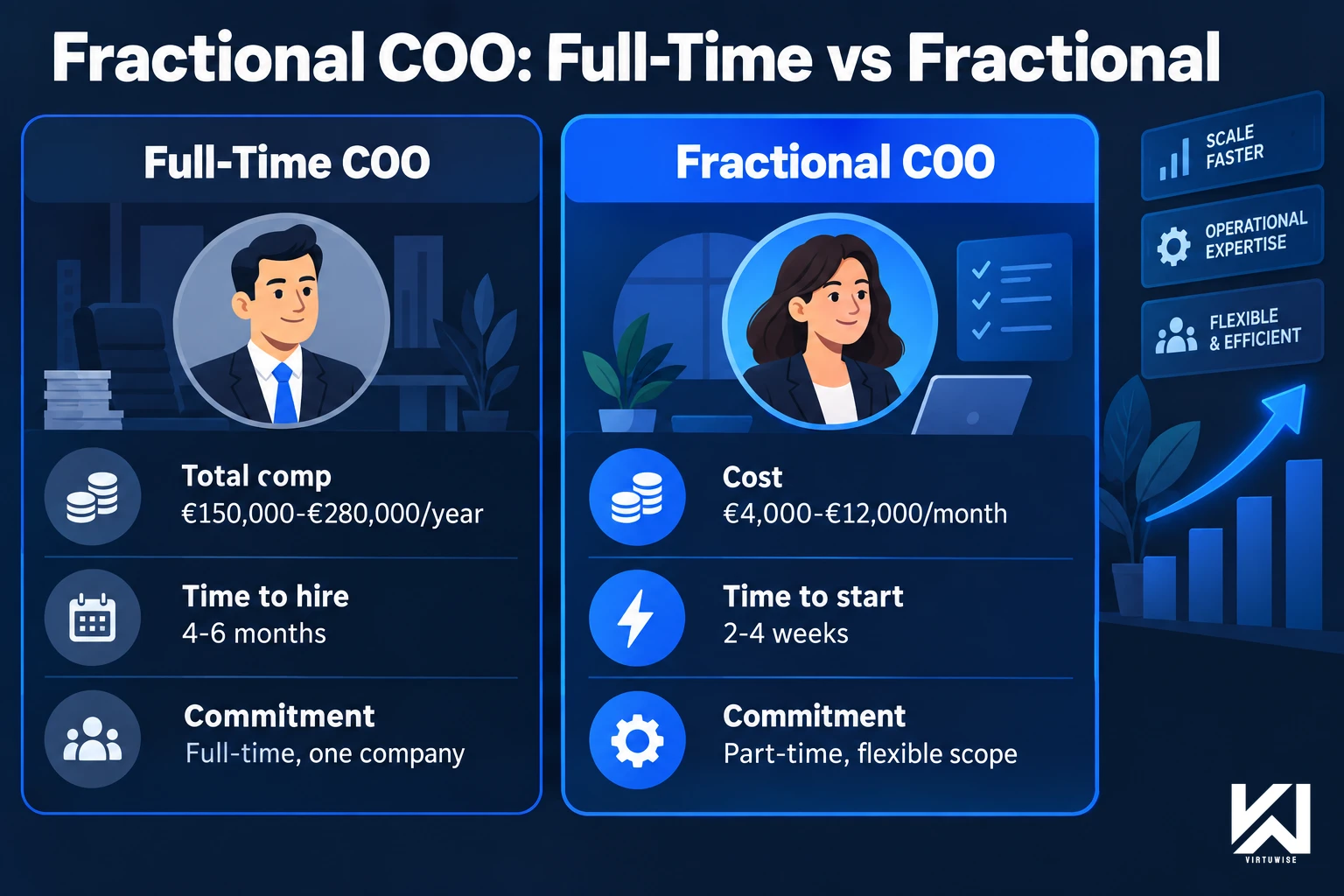
| Full-time COO — growth-stage company | €150,000–€280,000 total comp (base + bonus/equity) |
| Full-time COO — enterprise | €280,000+ total comp |
| Fractional COO | €4,000–€12,000/month, scope-dependent |
Full-time COO searches commonly run 4–6 months given how consequential and cross-functional the hire is — a mis-hire at this level is expensive to identify and expensive to unwind. Fractional engagements typically start within 2–4 weeks and let a company evaluate fit before committing to a permanent, full-time seat.
Here's how that comparison looks side by side:
Fractional COO vs Full-Time COO vs COO-as-a-Service
| Factor | Full-Time COO | Fractional COO | COO-as-a-Service |
|---|---|---|---|
| Commitment | Full-time, one company | Part-time, set days/week | Flexible, often project-based |
| Time to start | 4–6 months | 2–4 weeks | 1–2 weeks |
| Cost | €150,000–€280,000/year | €4,000–€12,000/month | Varies, often project-scoped |
| Best fit | Company has outgrown fractional support and can justify a permanent seat | Company needs senior operational leadership before it needs (or can justify) full-time | Company needs a specific operational project solved, not ongoing leadership |
"COO-as-a-service" is a less standardized term than fractional CMO or fractional COO — some providers use it interchangeably with fractional COO, others mean project-based operational consulting with a narrower, time-boxed scope. Clarify which model a provider actually means before comparing pricing.
When to Hire a Fractional COO
A Fractional COO tends to be the right call when:
- Execution consistently lags behind strategy — good plans, inconsistent follow-through
- Cross-functional friction between sales, marketing, product, and operations is visibly slowing growth
- The founder is personally absorbing operational work that's pulling focus from decisions only they can make
- The company is preparing to scale headcount or enter new markets and needs operational infrastructure to support it
- You need senior operational judgment now, but aren't yet ready to justify a full-time COO's cost and commitment
It's a weaker fit when a company genuinely needs full-time, hands-on operational management immediately — the fractional model's part-time structure is its core tradeoff, not a limitation to work around. Once operational complexity is constant and significant enough, a full-time hire is usually the right call once you can justify and fill it.
Where VirtuWise Fits In
Operational bottlenecks and growth bottlenecks are often the same problem described differently — a company that can't execute reliably usually can't grow reliably either. VirtuWise's Fractional Growth Partner service covers this ground when the underlying issue is operational: a revenue engine audit that includes how well marketing, sales, and operations actually work together, followed by optional Advisory or hands-on Implementation.
We're not a COO-for-hire service specifically — our mandate centers on the growth engine rather than full operational ownership. But where growth is bottlenecked by execution and cross-functional alignment rather than pure strategy, the overlap is real, and it's worth a conversation about which scope actually fits.
Full details at virtuwise.io/pricing or on the Fractional Growth Partner services page.
Frequently Asked Questions
What does a fractional COO do?A fractional COO owns operational execution — turning strategy into repeatable systems, processes, and cross-functional coordination — on a part-time basis. Day-to-day work includes building operational infrastructure (reporting, workflows, hiring processes), running cross-functional alignment between departments, managing key vendor and partner relationships, and reporting operational health to the founder or board.
What is included in fractional COO services?Fractional COO services typically include operational audits and process design, cross-functional leadership (aligning sales, marketing, product, and operations), team and hiring process oversight, vendor and partner management, and operational reporting to the founder or board. Scope varies by engagement — some fractional COOs focus narrowly on one operational bottleneck, others take broader cross-functional ownership.
How much does a fractional COO cost?A full-time COO at a growth-stage company typically costs €150,000–€280,000 in total compensation (base plus bonus/equity). A fractional COO typically costs €4,000–€12,000/month depending on scope and time commitment — a fraction of full-time total comp, without a multi-month search or a permanent headcount commitment.
Fractional COO vs full-time COO — what's the real difference?A full-time COO is a permanent, full-time seat with deep day-to-day involvement across the organization. A fractional COO provides the same strategic operational leadership — systems, process, cross-functional alignment — on a part-time basis, typically a set number of days per week. The fractional model fits companies that need senior operational judgment before they need (or can justify) a full-time executive seat.
When should a company hire a fractional COO?A fractional COO tends to be the right call when a company has outgrown ad hoc operations — inconsistent processes, cross-functional friction, unclear ownership of execution — but isn't yet at the scale or budget to justify a full-time COO. It's a weaker fit when the company needs full-time, hands-on operational management immediately, which is the fractional model's core tradeoff rather than a limitation to work around.