
Inbound Sales vs Outbound Sales: Why Top B2B Companies Use Both in 2026
Learn why the most effective B2B companies combine inbound and outbound sales strategies to build predictable pipelines, achieve 38% higher revenue growth, and close deals faster.
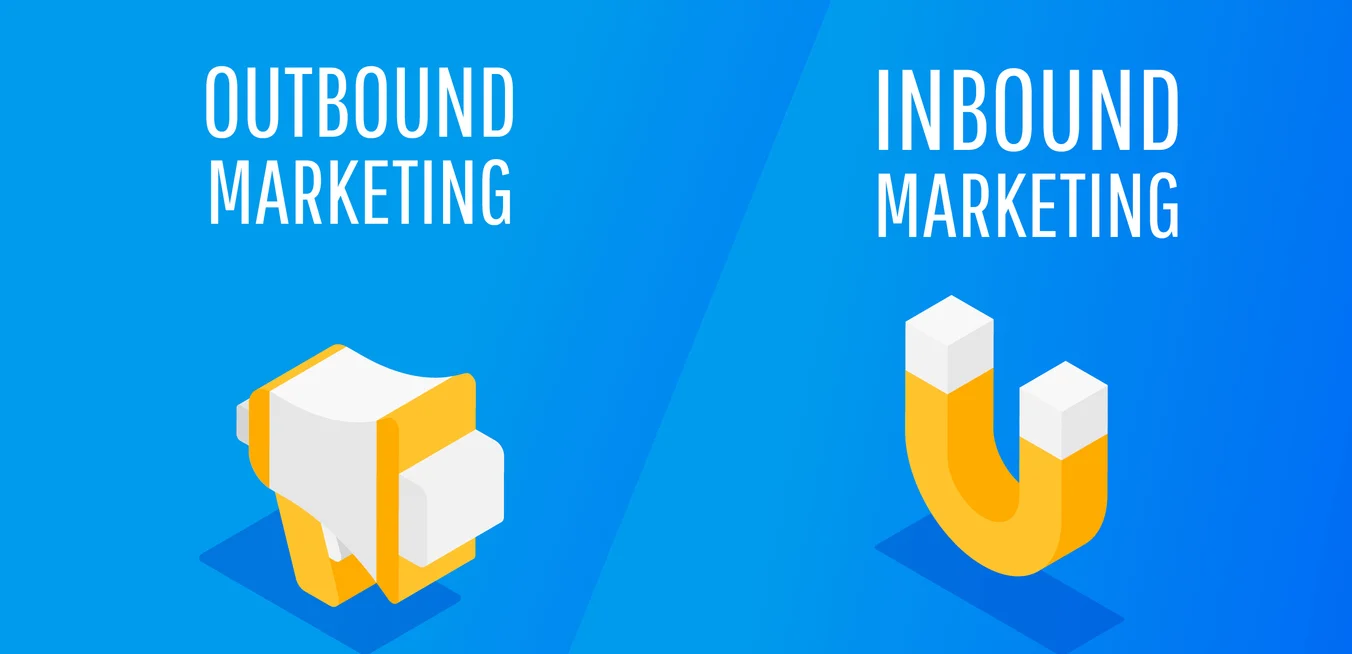
Inbound sales attracts prospects through content, SEO, and organic discovery.
Outbound sales proactively reaches decision-makers through channels such as LinkedIn outreach, cold email, and targeted prospecting.
The most effective B2B companies combine both approaches to build a predictable B2B pipeline.
B2B teams integrating inbound and outbound strategies achieve 38% higher revenue growth. The data settles the debate.
Modern buyers demand 70+ touchpoints across six channels before purchasing. Inbound leads convert at 14.6%. Outbound leads match ideal customer profiles precisely through proper nurturing. Yet 80% of leads fail to convert due to qualification failures, not performance gaps.
The strategic framework: understand when each approach delivers results. Build integrated systems for predictable pipeline growth. Execute both for sustained competitive advantage.
What is Inbound Sales?
Inbound sales responds to buyer-initiated interest. Prospects discover your company through content, search engines, or referrals, then initiate contact themselves. Your prospects consume content first—blog posts, resources, webinars, demos—before engaging.
B2B buyers complete 57% of purchase decisions before speaking with sales. Inbound sales positions your team where prospects already research solutions.
How Inbound Sales Works
Content attracts prospects searching for solutions. You create blog posts, guides, case studies, and videos answering specific customer questions. SEO optimization ensures content ranks when prospects search Google for problems your product solves.
Website visitors engage with content and conversion points. Some download whitepapers. Others request product demos. Many subscribe to newsletters. Each action signals interest and captures contact information.
Sales teams qualify leads based on fit and intent signals. A pricing guide download indicates higher intent than a single blog post read. Sales reps prioritize conversations with prospects showing genuine buying interest.
Qualification examines company size, industry, budget, and decision-making authority. Inbound leads arrive with specific questions because they've researched your solution. Sales conversations address unique challenges rather than explaining basic concepts.
Demand generation amplifies this process across multiple channels. LinkedIn content builds authority and drives traffic. Email sequences educate prospects over time. Webinars demonstrate expertise while capturing qualified leads. Each channel feeds your sales pipeline.
Timing drives inbound sales strength. Prospects contact you when actively seeking solutions, not when your calendar dictates calls. This self-selection creates higher engagement rates during sales conversations.
Inbound sales requires patience. Building content libraries, earning search rankings, and establishing brand awareness takes months. Your first blog post generates no immediate leads. SEO campaigns need 6-12 months for meaningful results.
Lead behavior reveals the core difference. Inbound prospects arrive with company context. Outbound prospects require education about your identity and value proposition. Inbound creates long-term asset value. Outbound delivers immediate pipeline control.
What is Outbound Sales?
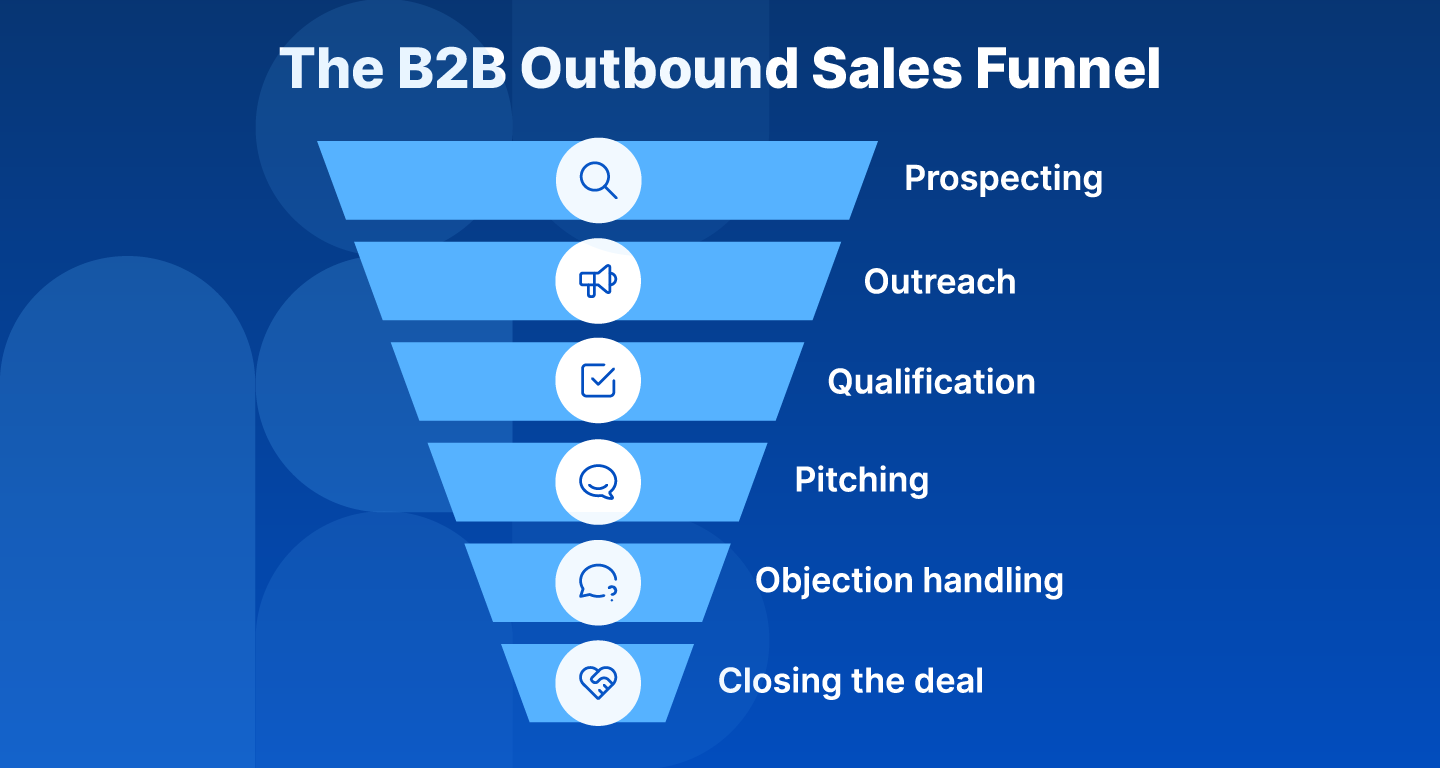
Outbound sales delivers pipeline control. Your team identifies target accounts, researches decision-makers, initiates conversations. No waiting for prospects to discover you.
How Outbound Sales Works
Define ideal customer profiles. Company size, industry, revenue, technology stack. Research follows targeting. LinkedIn profiles, company news, funding announcements, hiring patterns.
Multi-channel outreach executes the strategy:
- Cold emails addressing specific pain points
- LinkedIn messages within professional context
- Events and conferences for real-time conversations with decision-makers
Control differentiates outbound from inbound. Your reps schedule prospecting blocks. Set KPIs. Determine account attention. Generate leads on demand.
Outbound Lead Generation Tactics
Strategic execution requires multiple approaches:
- Cold email sequences personalized through prospect research
- LinkedIn outreach targeting specific roles and companies
- Conference attendance for valuable conversations
- Account-based marketing coordinating sales and marketing efforts
- Strategic partnerships using warm introductions
While conferences are often treated as simple networking opportunities, in practice they function as a highly structured outbound channel when executed correctly — combining pre-event outreach, on-site meetings, and post-event campaigns. A detailed breakdown of this process is covered here: conference lead generation for B2B.
Benefits of Outbound Sales
Pipeline predictability. Need 20 qualified meetings this month? Your team emails and messages until the target is achieved.
Precise targeting improves lead quality. Select accounts matching ideal customer profiles. Sales conversations start with qualified buyers.
Scalability follows mathematical principles. Two additional SDRs double outreach capacity. Email volume from 100 to 200 daily expands reach proportionally.
Common Outbound Sales Challenges
Response rates present obstacles. Cold emails achieve 3-6% reply rates. LinkedIn reply rates reach 30-35% across industries. 100 conversations generate 10 leads, book 1-2 meetings.
Reputation management demands execution discipline. Aggressive outreach damages brand equity. Spam filters block poor messaging. LinkedIn restricts excessive connection requests. Quality outperforms quantity.
Inbound vs Outbound Sales: Key Differences

Five fundamental differences determine your pipeline strategy. Each impacts budget allocation and revenue predictability.
Speed to Results
Outbound generates immediate pipeline activity. Launch campaigns on Monday. Book meetings on Friday. LinkedIn outreach connects with decision-makers within days. Email prospecting creates conversations on demand.
Inbound builds momentum over months. SEO content requires 6-12 months to rank. Blog posts need consistent publishing before generating meaningful traffic. Sustained effort drives reliable demand generation.
Cost Per Lead
Outbound demands direct investment in tools, team salaries, and outreach volume. Email software, LinkedIn Sales Navigator, SDR headcount. Costs scale linearly with activity.
Inbound front-loads investment in content creation and marketing automation. Higher initial costs, but content generates leads indefinitely. A ranking blog post attracts prospects for years without additional spend per lead.
Scalability and Control
Outbound scales through team expansion and increased activity. Add SDRs. Increase email volume. Expand call blocks. You control which accounts receive outreach and when conversations happen.
Inbound scales through content multiplication and channel diversification. More content, additional keywords, new platforms increase reach. However, you cannot force prospect engagement timing.
Lead Quality and Conversion
Outbound enables precise targeting. Select accounts matching ideal customer profiles. Research decision-makers. Personalize outreach to specific pain points. This precision creates qualified conversations immediately.
Inbound attracts self-qualified prospects actively researching solutions. Higher intent leads because they chose to engage. Not every website visitor matches your ideal customer profile, requiring qualification processes.
Sales Cycle Length
Buyer readiness differs significantly. Inbound prospects arrive mid-funnel, having researched alternatives. Prior education shortens sales cycles.
Outbound conversations start at awareness stage. Your team educates prospects about problems they might not recognize. This extends the path from first contact to closed deal.
Strategic Comparison Framework
| Attribute | Inbound Sales | Outbound Sales |
|---|---|---|
| Definition | Prospects initiate contact after discovering content, search results, referrals | Sales teams identify targets, research decision-makers, initiate cold outreach |
| Timing Control | Prospect-driven timing based on active solution research | Rep-controlled scheduling, quotas, account prioritization |
| Speed to Results | 6-12 month momentum building; sustained content development required | Immediate pipeline generation; Monday launch to Friday meetings |
| Cost Structure | Front-loaded content investment; indefinite lead generation per asset | Linear scaling costs; predictable tool and headcount expenses |
| Scalability Model | Content multiplication across channels; timeline dependencies exist | Team expansion drives proportional capacity increases |
| Lead Qualification | Self-selected, higher-intent prospects; requires visitor filtering | Precise ICP targeting; first-touchpoint qualification achieved |
| Conversion Metrics | 14.6% conversion rates documented | ICP-matched leads through proper nurturing protocols |
| Sales Cycle | Mid-funnel entry; pre-researched buyer education complete | Awareness-stage initiation; problem education requirements |
| Buyer Context | Company knowledge and specific questions established | Education needed on value proposition and relevance |
| Core Tactics | SEO content, webinars, whitepapers, nurture sequences, thought leadership | Cold sequences, LinkedIn prospecting, email outreach, ABM coordination |
| Response Rates | Intent-based engagement metrics | 3-6% email replies; 20-25% LinkedIn reply rates |
| Optimal Conditions | Established categories, brand recognition, extended sales cycles, budget limitations | Immediate pipeline needs, niche ICPs, early-stage companies, product launches |
| Primary Constraints | Patience requirements; ranking timelines; content library development | Low response rates; reputation management; platform restrictions |
| Market Alignment | Search volume expansion; reduced competitive intensity | Traffic downturns; high acquisition cost environments |
Integration Results: 38% higher revenue growth. 47% faster deal closure. Reduced customer acquisition costs across combined approaches.
When Each Sales Approach Works Best
Business stage and growth objectives determine optimal approach selection. Market position, timeline, and resource allocation drive strategic decisions.
Inbound Sales Performs Better
Established categories where buyers actively research solutions favor inbound strategies. Prospects searching "project management software" encounter SEO-optimized content at decision points. Brand recognition accelerates trust-building through content discovery.
Enterprise sales cycles spanning 6-12 months align with nurture sequence timing. Decision-makers require evaluation periods, consensus building, and budget approval processes. Educational content supports each stage systematically.
Resource constraints make content creation more efficient than SDR team expansion. Quality blog posts generate leads indefinitely without per-lead costs.
Outbound Sales Performs Better
Immediate pipeline requirements demand outbound execution. Product launches, market entry, and quarterly targets require controllable lead generation. Cold outreach produces meetings within days rather than months.
Niche markets benefit from precision targeting capabilities. SaaS companies with 50-200 employees in healthcare represent identifiable prospect universes. Direct outreach reaches decision-makers systematically.
Startups lacking brand recognition face organic discovery challenges. Generic keyword competition against established players requires substantial investment. Relationship building precedes search visibility.
Market Conditions Impact Strategy Selection
Economic downturns favor direct outreach control. Inbound traffic reductions of 30% still allow meeting generation through systematic prospecting. Market expansions increase search volume, improving inbound effectiveness.
Competitive saturation drives acquisition cost increases across channels. Strategy adaptation responds to shifting market dynamics and cost structures.
Why the Best B2B Companies Combine Both
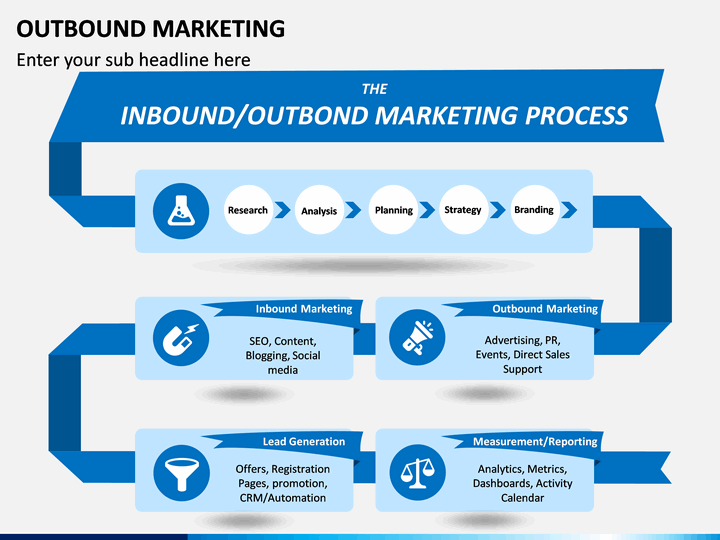
Companies waste resources debating channel selection. Integration delivers results. Companies running combined approaches close deals 47% faster with lower acquisition costs.
The Hybrid Lead Generation Strategy
Strategic allocation drives performance. Outbound controls the immediate pipeline through LinkedIn outreach and cold email campaigns.
Cold outreach often works alongside structured email prospecting systems that generate consistent meeting flow. See our framework here: B2B email outreach.
Many B2B companies implement this through structured LinkedIn outreach systems designed to generate conversations with decision-makers. You can explore a detailed breakdown here: LinkedIn B2B lead generation strategy.
Inbound builds long-term efficiency through SEO content and demand generation assets.
Timing problems disappear. Product launches demand outbound speed for immediate meetings. Content libraries grow while rankings improve. Inbound reduces manual outreach dependence over time.
How Inbound and Outbound Support Each Other
Outbound research informs content strategy. Pain points discovered in cold outreach become blog topics. LinkedIn prospect questions guide content creation. SDRs conduct market research continuously.
Inbound content warms outbound prospects. Decision-makers ignore first emails, engage after consuming content. LinkedIn connections become receptive after seeing company thought leadership.
Building a Predictable B2B Pipeline
Control variables. Create predictability.
If you want to see how these elements connect into a structured acquisition system, explore our guide on predictable B2B sales pipeline.
Outbound provides the pipeline floor through consistent activity. Baseline meeting volume guaranteed. Inbound creates the ceiling through compounding content assets.
Monthly targets rely on 60% outbound delivery through direct effort. Inbound contributes 40%, growing quarterly as content gains traction.
Implementation Framework
Start with outbound for immediate revenue. Build inbound assets simultaneously.
Allocate 70% resources to cold email campaigns and LinkedIn prospecting. Dedicate 30% to SEO content and nurture sequences. Adjust ratios quarterly as inbound momentum builds.
Execute both. Scale strategically.
Conclusion
Inbound builds credibility and long-term visibility.
Outbound creates immediate conversations with decision-makers.
The fastest growing B2B companies design systems where both channels work together.
If you want to generate qualified meetings through structured LinkedIn outreach and outbound prospecting, explore our LinkedIn lead generation services.