
LinkedIn Profile Optimization for B2B Lead Generation: Why People Buy From People
Learn how to optimize your LinkedIn profile for B2B lead generation. Six essential steps to turn your profile into a trust-building conversion tool that drives qualified conversations.
LinkedIn drives nearly 80% of B2B leads, yet most professionals waste this opportunity. They build resumes instead of conversion tools.
People buy from people.
In B2B outreach, prospects often check your LinkedIn profile within seconds after receiving your message. That moment determines whether a conversation starts — or ends. Remember: Your profile is part of a predictable B2B sales pipeline, not a standalone asset.
In our outbound campaigns we repeatedly see the same pattern: well-positioned profiles generate significantly higher reply rates than generic profiles.
In some cases, even small profile differences can impact results. In identical campaigns targeting the same audience with the same offer, certain profiles generate up to 20–25% higher reply rates, purely because they build more trust.
Strategic LinkedIn profile optimization eliminates that friction. When your profile positioning aligns with your outreach messaging, profile visits turn into qualified conversations.
Below are six essential steps to turn your LinkedIn profile into a B2B lead generation asset.
The six key elements of LinkedIn profile optimization for B2B lead generation include:
- Professional profile picture that builds trust
- Strategic banner communicating your niche
- Headline focused on your value proposition
- Featured section showcasing authority or offers
- About section structured around proof and results
- Recommendations and social validation
Why Most LinkedIn Profiles Kill B2B Outreach
Outreach messages promise value. Profiles deliver confusion. This disconnect destroys response rates before prospects reach your About section.
Common LinkedIn Profile Mistakes in B2B Outreach
Most professionals optimize their profile for job searching instead of client conversion. This creates a major gap between outreach messaging and profile positioning.
The most common mistakes include:
- Generic headlines that only show a job title
- About sections written like resumes
- No proof of results or recommendations
- No clear call to action for visitors
- Profile positioning that does not match outreach targeting
When prospects receive a message and visit a profile that feels generic or inconsistent, trust drops immediately.
Your LinkedIn profile should reinforce your outreach message, not contradict it.
Mismatch Between Outreach Message and Profile Positioning
Buyers decide relevance in seconds. Outreach targeting SaaS revenue challenges meets profiles showcasing generic business development experience. The message claims specialization. The profile suggests generalization.
Prospects question competence immediately. You promise specific solutions but present broad experience. Sellers build profiles for validation instead of conversion. Strategic alignment requires profile positioning that reinforces outreach claims.
Generic Headlines That Say Nothing
Default formats dominate: job title plus company name. Fifteen identical "Sales Manager at Company X" headlines create noise, not differentiation. LinkedIn provides 120 characters for value communication. Generic titles waste this space on irrelevant keywords.
Headlines function as personal advertisements. They must answer two questions: who you help and what outcomes you deliver. Employment status communicates nothing about client impact.
No Clear Value Proposition
Profiles catalog past employer achievements instead of client deliverables. Internal performance metrics matter less than external impact. Prospects evaluate relevance to their specific challenges. Without clear value propositions, profiles become data dumps.
Sales performance numbers mean nothing without context. How does your track record translate to client success? Profiles must communicate competitive advantage, not career history.
Missing Proof Elements
Recommendations provide credibility markers. They offer tangible evidence of impact and reliability. Profiles without recommendations signal inexperience. Social proof reduces buyer friction through third-party validation.
Zero recommendations or colleague endorsements raise concerns. Strong client testimonials from relevant industries build trust. Missing proof elements force prospects to accept claims without verification.
No Clear Call to Action
About sections end with vague invitations like "feel free to reach out anytime". These non-directions leave prospects without next steps. Specificity drives action. Clear calls to action guide engagement: book consultations, download resources, schedule conversations.
Missing CTAs create dead ends instead of conversion pathways. Prospects read, evaluate, then leave without engaging.
Step 1: Profile Picture as Your First Trust Trigger
Clients spend 19% of their viewing time examining your profile picture. Trust decisions form before they read your headline.
Why Professional Photos Generate 21x More Profile Views
Professional photos deliver measurable results. Profiles with quality images receive 21 times more profile views, 9 times more connection requests, and 36 times more messages. LinkedIn's algorithm prioritizes complete profiles. Images make profiles 14 times more likely to appear in search results.
86% of clients form opinions within seconds. Your photo determines whether they continue reading or move to the next candidate.
Trust Psychology Behind Visual First Impressions
First impressions form within 100 milliseconds. These judgments predict hiring decisions and business partnerships. PhotoFeeler data shows specific elements drive trust. Smiling with visible teeth increases likability by 1.35 points, competence by 0.33, and influence by 0.22. Formal business attire produces the largest competence gain (+0.94) and influence boost (+1.29). Solid backgrounds increase trust ratings by 41% over cluttered settings.
Practical Guidelines for B2B Profile Pictures
Face should occupy 60-70% of the frame. LinkedIn displays photos as 32-pixel thumbnails in search results. When your head fills two-thirds of the circle, features remain recognizable at small sizes.
Technical requirements: minimum 400x400 pixels in JPG or PNG format. Wear industry-appropriate business attire. Use neutral backgrounds with proper lighting. Smile naturally with teeth visible. Avoid sunglasses, group photos, or casual settings.
Update photos regularly. 50.26% of users keep the same image for three to six years. Fresh photos signal active engagement.
Step 2: Banner as Your Silent Positioning Layer

Your banner commands 1584x396 pixels of prime real estate. This visual loads before your headline. First impression territory.
Why Banners Drive Conversion Rates
Banner text appears first. Mobile users see banners prominently before scrolling - 60% of LinkedIn traffic. Unprofessional banners kill credibility, reduce visibility, create inconsistency. Professional banners build trust and generate leads.
Users decide engagement within 3 seconds. Strong UI increases conversions 200%. Solid UX pushes that to 400%.
Banner Design Framework
One primary message. 1-2 supporting elements. Maximum 12-15 words.
Structure: action verb + target industry + your solution. Add contact information strategically. Three colors maximum. Clean, minimal design. Display your solution clearly.
Mobile optimization: 48pt font for primary text, 36pt for secondary. Center third placement - mobile crops edges.
Strategic CTA Placement
Position CTAs where eyes travel naturally. Clear CTAs increase engagement through views, likes, shares, comments. Make CTAs actionable, specific, contrasting.
Testimonials beside CTAs boost conversions 34%. Skip website URLs or email addresses - people don't type anymore. Direct them to DM or Featured section contact links. Test CTA performance with data.
Banner Mistakes That Kill Conversions
Seven critical errors: no banner, massive logos, city skylines, oversized names, inspirational quotes, cluttered messages, desk photos. Additional failures: pixelated images, information overload, irrelevant visuals, missing brand elements, complex designs, poor mobile optimization.
Banner focus: value you provide through your solution. Four-figure engagement costs justify USD 200 professional banner investment.
Step 3: Headline for Micro-Niche Positioning in B2B
Headlines determine engagement. LinkedIn provides 220 characters for headlines, yet professionals waste this space on generic job titles that communicate zero value.
Why Niche Positioning Wins in B2B
Niche positioning reduces competition immediately. Specialists command premium pricing over generalists. Targeted expertise builds stronger client trust and opens strategic partnership opportunities. Focused companies achieve higher valuations due to reduced perceived risk.
Headline Structure Framework: Value Prop, Proof, Role
Effective headlines combine four elements: Job Title + Expertise + Differentiation + Tagline or Value Statement. Example: "Vice President Human Resources | Employee Engagement | Retained 90% of Employees and Grew Team by 50%. I am committed to creating an inclusive and equitable experience for all" demonstrates this structure in 212 characters.
SEO Logic for LinkedIn Headlines
LinkedIn allocates 220 characters for headlines. The first 75 characters carry maximum SEO weight. Lead with searchable job titles, then add expertise areas and differentiators within those critical opening characters. Profile indexing occurs immediately in LinkedIn's search engine.
B2B Headline Examples That Convert
Strong B2B headlines merge role clarity with measurable outcomes. "Content Marketing Strategist | Helping B2B SaaS Companies Generate Leads Through SEO & Thought Leadership" demonstrates niche focus. "VP of Sales | Helping B2B SaaS Companies Scale from USD 1.00M to USD 10.00M ARR Without Burning Out Their Teams | Ex-Salesforce, 15+ Years in Enterprise Sales" uses 218 characters effectively.
Step 4: Featured Section Strategy - Authority vs Offer
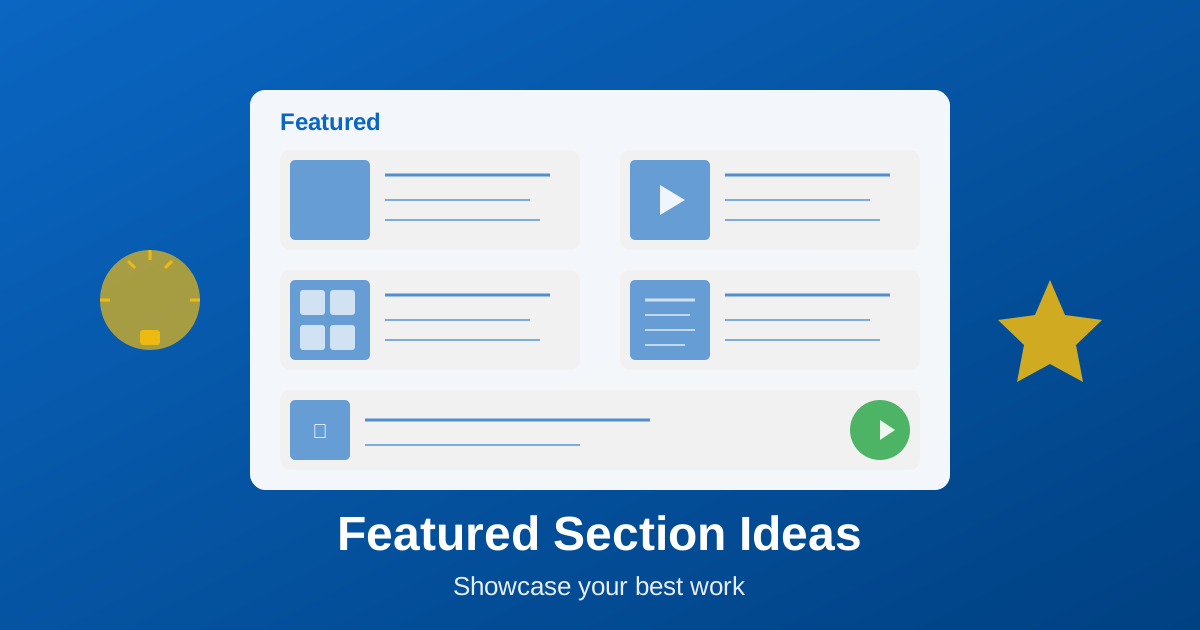
Step-by-step guide to creating a LinkedIn Featured section that encourages user engagement and action.
The Featured section delivers 4.1x more inbound messages. Educational content drives 53% higher buyer engagement. Strategic content placement here determines conversion outcomes.
Two Strategic Approaches for Featured Content
Authority-based content establishes credibility through thought leadership and industry recognition. Offer-based content drives conversions through lead magnets and case studies. Your business model determines the optimal approach.
When to Use Authority-Based Content
Corporate professionals benefit from authority positioning. Feature industry insights, press mentions, podcast appearances, company news. This builds trust before prospects engage. Credibility drives enterprise sales cycles.
When to Use Offer-Based Content
Business owners need offer-based Featured content. Include signature offers, free resources, client success stories, newsletter links. Structure works: free resource for leads, low-ticket offer for trials, high-ticket service for buyers. Direct conversion focus.
Visual Optimization for Featured Section
Maintain 4-6 high-quality items maximum. Use 1200x627 pixel thumbnails with clear headlines and brand colors. Visual consistency signals professionalism. Increases click-through rates systematically.
Driving Traffic Through Featured Links
Add specific calls-to-action in descriptions. Track traffic using UTM parameters in analytics. Test featured content monthly. Monitor correlation with connection requests for systematic optimization.
Step 5: About Section as Structured Conversion Narrative
LinkedIn About Section CTA templates designed to generate messages instead of just views or clicks.
Profiles with completed About sections receive 3.9x more views than incomplete profiles. This 2,600-character space determines conversion rates. Execute it strategically.
5-Part Structure for High-Converting About Sections
The About section functions as sales copy, not biography. Strategic profiles follow systematic patterns: address problems, establish authority, prove results, demonstrate value, direct action.
Part 1: Hook Statement opens with industry insight, not credentials. First lines capture attention before "see more" clicks. Start with unexpected truths about client challenges or market realities. Skip certifications. Credentials matter after prospects understand your value proposition. Part 2: Authority Positioning establishes expertise through methodology. Define your target segment, specific outcomes delivered, unique approach. Differentiate your work from competitors. Include experience highlights that build credibility without resume-style listings. Part 3: Evidence Section provides quantifiable proof. List achievements with metrics and data points. Social proof reduces decision friction. Include one testimonial quote capturing exact transformation prospects want. Add client name and company with permission. Part 4: Value Demonstration explains problem-solving approach. Show results achieved with quantifiable outcomes. Make transformation concrete through specific examples rather than abstract claims. Part 5: Clear Direction provides explicit next steps. Specify exact actions: book consultation, download resource, send targeted message. Include direct links or precise instructions. Eliminate friction between interest and engagement.Strategic Framework for B2B Profiles
B2B profiles focused on lead generation require structured positioning:
Industry perspective or belief system
Specific niche or problem solved
Origin story or unique insight
Quantifiable proof of results
Specific action for prospects
Alternative approach uses Problem-Agitate-Solution methodology. Identify client challenges. Describe improved outcomes without these problems. Position yourself as bridge between current state and desired results.
Storytelling-based profiles share journey narratives: struggles encountered, breakthrough moment, current focus, target clients served. This approach works for personal brands, creators, consultants.
What Kills About Section Performance
Third-person writing creates distance and reduces authenticity. Use first-person language with "I" and "my" for connection. About sections describe people, not corporate entities written by invisible authors.
Resume-style content belongs in Experience sections. Career progression and job duties waste About section space. Leading with degrees, certifications, awards prioritizes validation over relevance.
Business jargon destroys specificity. Terms like "strategic," "motivated," "creative," "innovative," "detail-oriented" communicate nothing. These buzzwords signal unclear thinking. Replace adjectives with action verbs and measurable results.
Dense text blocks kill readability. Create white space through paragraph breaks. Prospects skim content, so structure information visually.
Generic endings like "feel free to reach out anytime" waste conversion opportunities. Passive statements leave prospects without clear direction.
Keyword Strategy for Search Visibility
LinkedIn's algorithm indexes About sections for keyword relevance. Use 2,600 characters strategically with industry-specific terminology. Include relevant keywords naturally within narrative structure.
Place keywords within professional context. Example: "Digital marketer specializing in SEO, content strategy, analytics" integrates key terms naturally.
Structure content in readable paragraphs while maintaining conversational tone. Include keyword variations reflecting expertise and industry focus. Highlight capabilities using terms prospects search for.
B2B marketing strategies require phrases like "pipeline management," "lead generation," "account development" based on role focus. Avoid keyword stuffing. Natural placement within compelling narrative speaks to ideal client profiles.
Step 6: Proof, Recommendations and Social Validation
B2B buyers demand validation. 79% rely on social proof when making purchase decisions. Your recommendations section builds trust or signals inexperience.
Why Social Proof Reduces Buyer Friction
Social proof eliminates buyer hesitation. 92% of consumers trust recommendations as personal advice. 92% hesitate without reviews. Products with reviews show 270% higher purchase likelihood.
Validation works through accumulation. Consistent signals across contexts reduce uncertainty. Prospects see messages confirmed by trusted peers. Risk perception drops. Brain reward circuits treat popular options as more valuable.
How to Request Strong Recommendations
Target existing customers who understand your ideal buyers' pain points. Provide specific context: achievements, challenges solved, results delivered. Request while work remains fresh. Personalize each message. Generic templates fail.
LinkedIn requires relationship type, position timing, and personalized message. Frame requests around client outcomes, not personal praise.
What Makes a Recommendation Valuable for B2B
Strong recommendations address tangible benefits your buyers seek. Identity-relevant proof outweighs generic praise. Highlight transformations, not name-drops. Product managers trust other product managers. Video testimonials increase conversions by 80% over text.
Request recommendations that speak to specific problems you solve. Generic praise adds no strategic value.
Aligning Your Profile with Your LinkedIn Outreach Strategy
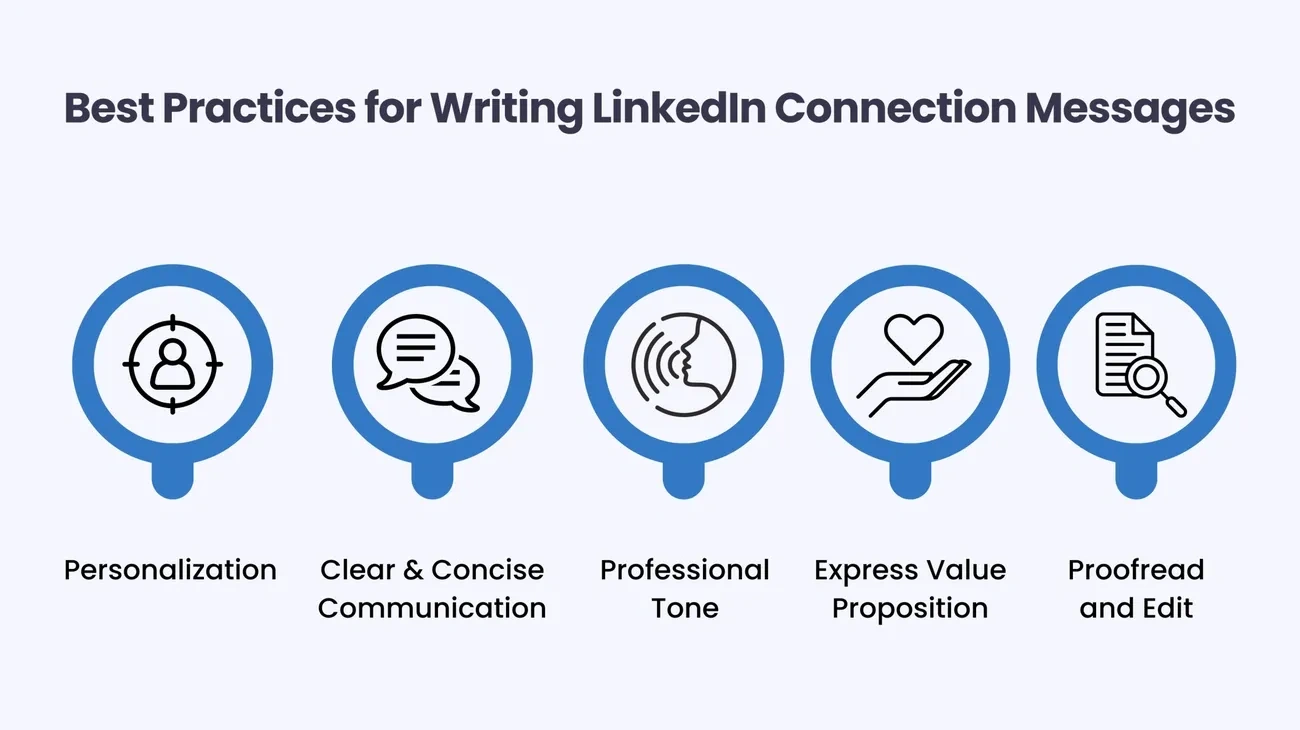
Profile optimization fails without strategic alignment. Outreach messaging and profile positioning must connect. Disconnection kills conversion rates.
Profile Must Match Your Messaging
Your profile functions as the landing page before conversations begin. Outreach promises SaaS revenue solutions. Profile displays generic business development experience. Prospects notice gaps immediately.
Most profiles fail because they seek approval, not conversion. Establish your ICP clearly. Five seconds to prove relevance to your target audience. No exceptions.
Why Niche Outreach Requires Niche Profiles
Niche outreach demands niche profiles. Messages target fintech product managers. Headlines must speak directly to that segment. Generic positioning dilutes impact.
Keywords matter. Add them to headlines, About sections, and experience that match your ICP. Strategic consistency drives results.
Understanding Conversion Leakage
Profiles leak conversions when positioning misaligns with messaging. Prospects visit profiles after receiving outreach. Mismatched information creates friction. Conversations die before they start.
Profile conversion problems indicate demand leakage. Fix the alignment. Stop the leak.
Measuring Profile-Outreach Alignment
Track connection acceptance rates. Primary metric for success. Acceptance rates below 20% after 100 sends signal targeting or profile misalignment.
Monitor profile visit rates following outreach campaigns. High visit rates with low reply rates indicate profile conversion problems. For a deeper breakdown of the outreach strategy, see our guide on LinkedIn B2B lead generation strategy.
Data drives decisions. Measure alignment. Optimize accordingly.
LinkedIn Profile Optimization Checklist
Before launching outreach campaigns, make sure your LinkedIn profile includes:
- A professional profile photo that builds trust
- A banner clearly communicating your niche and offer
- A headline that explains who you help and what results you deliver
- A Featured section with authority or offer assets
- An About section structured around value and proof
- Recommendations from relevant clients or partners
- A clear call to action guiding visitors to the next step
Even small improvements across these elements can significantly increase reply rates in outbound campaigns.
A Small Gift for Reading Until the End
If you made it this far, thank you for taking the time to read the full guide.
As a small thank-you, we prepared several editable LinkedIn banner templates you can use to improve your profile positioning.
These LinkedIn banner examples are designed for consultants, founders, agencies, and B2B service providers building their personal brand or generating leads through LinkedIn.
You can open and customize the templates here:
👉 Access the editable LinkedIn banner templates.
Feel free to copy the structure, adapt the messaging, and tailor the banner to your niche and value proposition.
Conclusion
Your LinkedIn profile controls outreach success. Six strategic steps convert profiles from resumes into revenue tools.
Profile optimization requires systematic execution. Photo, banner, headline, Featured section, About section, recommendations. Each element must align with outreach positioning.
Profiles fail when messaging promises niche expertise but positioning signals generalist approach. Consistency eliminates conversion friction.
Start today. Choose one section. Fix the alignment gap between outreach claims and profile delivery.
Trust builds through consistency. Qualified conversations follow.
If you want to see how this strategy works in practice, explore our LinkedIn lead generation service.