
B2B Lead Generation Channels That Actually Work in 2026 (And Which Ones to Skip)
A practical breakdown of which B2B lead generation channels deliver pipeline in 2026, when to use each one, and how to combine them into a predictable acquisition system.

Most B2B companies use multiple lead generation channels — and still struggle to build a predictable pipeline.
Not because the channels don't work, but because they don't understand how each one actually behaves.
Some channels generate meetings in weeks. Others take months to show results. Some give full control over targeting. Others rely on passive discovery.
When these channels get mixed without a clear system, the result is always the same: activity without revenue.
In this guide, we break down which B2B lead generation channels actually work in 2026, when to use them, and how to combine them into a predictable pipeline.
What Are B2B Lead Generation Channels (And Why Most Companies Get Them Wrong)
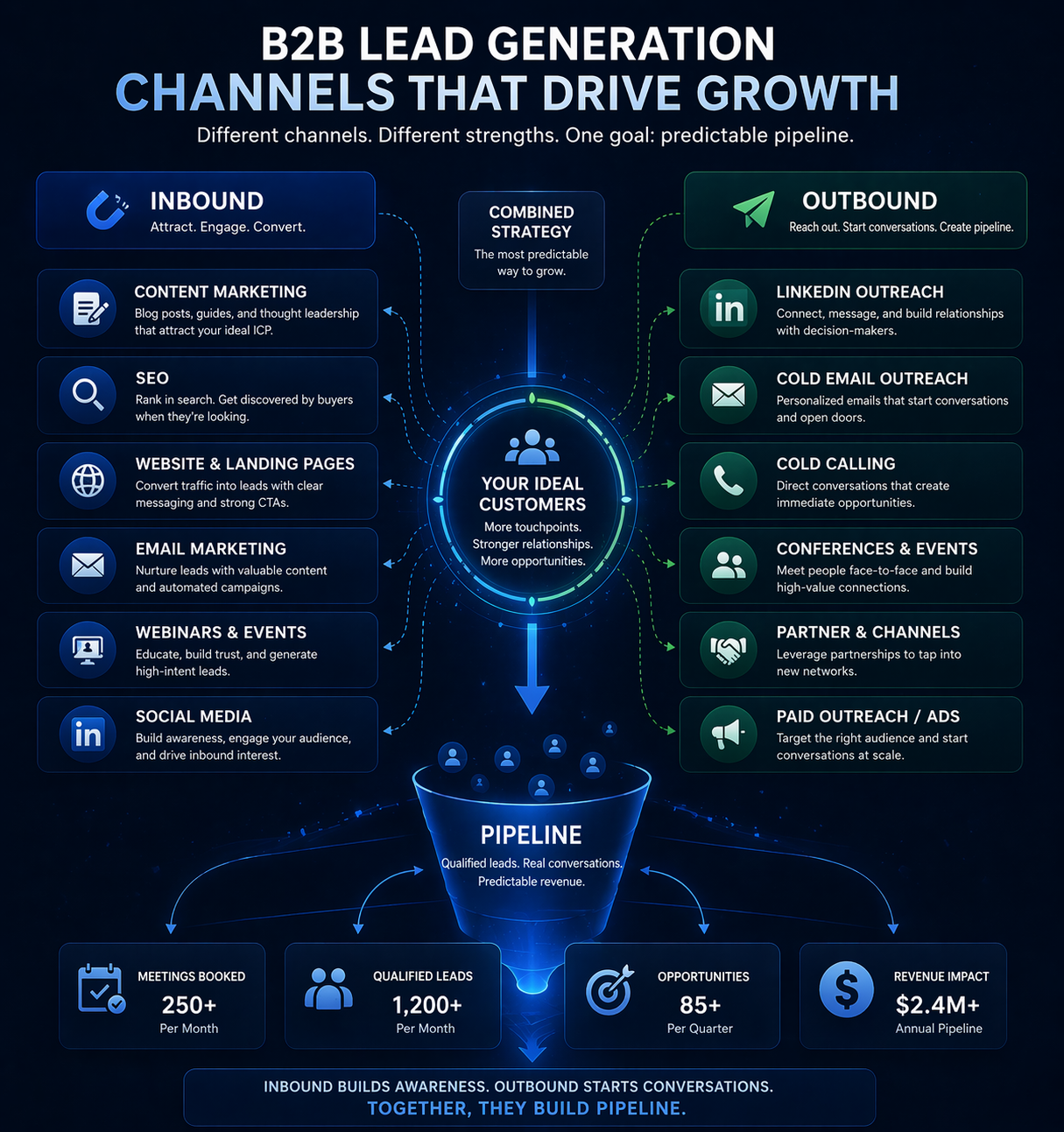
B2B lead generation channels are simply the ways companies find, reach, and convert potential customers into sales opportunities.
These include LinkedIn outreach, email campaigns, conferences, SEO, content, paid ads, and partnerships. Each of these channels works differently — not just in tactics, but in speed, cost, and level of control.
The problem is that most companies treat them as interchangeable.
They try multiple channels at once without understanding what each one is actually designed to do. Budgets are allocated based on trends or competitor behavior instead of pipeline needs. That's where things start to break.
A channel that generates 500 contacts means nothing if none of them turn into real conversations. Meanwhile, a channel that produces 30 qualified meetings with decision-makers can drive actual revenue.
The issue isn't lead generation — it's how companies measure it.Most teams optimize for activity: clicks, downloads, form fills. But none of these guarantee pipeline. The gap between activity and revenue is exactly why so many companies struggle to measure ROI.
Another common mistake is misalignment with business stage.
Early-stage companies invest in SEO and content when they need immediate feedback and pipeline. Growth-stage companies rely on manual outreach when they need scalable systems. Mature companies spread themselves across too many channels without mastering any of them.
Timing makes it worse. Inbound channels like SEO and content take 6–12 months to deliver consistent results. Outbound channels like LinkedIn and email can generate meetings within weeks. Yet companies often treat outbound as a short-term tactic instead of a core system.
In reality, channel performance depends less on the channel itself and more on how it's executed. A poorly structured outreach campaign will fail regardless of platform. A well-built system will consistently generate pipeline across channels.
The key is not choosing "the best channel," but matching channel mechanics to your business goals — speed, control, and predictability.
Outbound channels: control and immediate pipeline
Outbound approaches deliver three advantages that make them especially valuable for B2B companies requiring predictable pipeline.
First, they provide complete control over targeting. Sales teams select specific companies, job titles, and decision-makers rather than hoping the right prospects discover content organically. This precision matters when selling to narrow segments or pursuing accounts with particular characteristics.
Second, outbound channels generate meetings within days or weeks rather than months. A well-executed LinkedIn or email outreach campaign produces qualified conversations in the first 30 days. This speed becomes critical when companies need to verify product-market fit, test new segments, or fill immediate pipeline gaps.
Third, outbound creates predictability through volume control. Companies determine how many prospects to contact, which directly influences meeting volume and pipeline creation. This predictability enables accurate forecasting and systematic scaling — adding capacity produces proportional results when the system operates correctly.
Inbound channels: compounding but slow growth
Inbound B2B lead generation strategies operate through accumulation rather than immediate action. Content published now generates traffic and leads for months or years afterward. SEO rankings improve gradually as domain authority builds. Referral networks expand as customer bases grow.
This compounding effect creates significant long-term value but requires patience and consistent investment before meaningful results appear.
The delay between effort and outcome represents inbound's main limitation. Most content and SEO initiatives require six months minimum before producing consistent qualified leads. Paid acquisition channels work faster but often struggle with economics in complex B2B sales cycles where customer acquisition costs exceed sustainable thresholds.
Why most companies over-invest in inbound too early
Early-stage companies allocate disproportionate resources to content marketing and SEO despite needing immediate pipeline validation. The appeal of passive lead flow and scalable systems overshadows the practical reality that these channels will not produce results before cash reserves deplete or board patience expires.
This misallocation stems from confusing long-term strategy with immediate tactics. Inbound makes commercial sense after companies establish product-market fit, verify messaging, and build operational capacity to nurture slower-moving prospects. Investing heavily in inbound before achieving these milestones sacrifices speed and control precisely when companies need both most.
B2B Lead Generation Channels That Actually Work in 2026
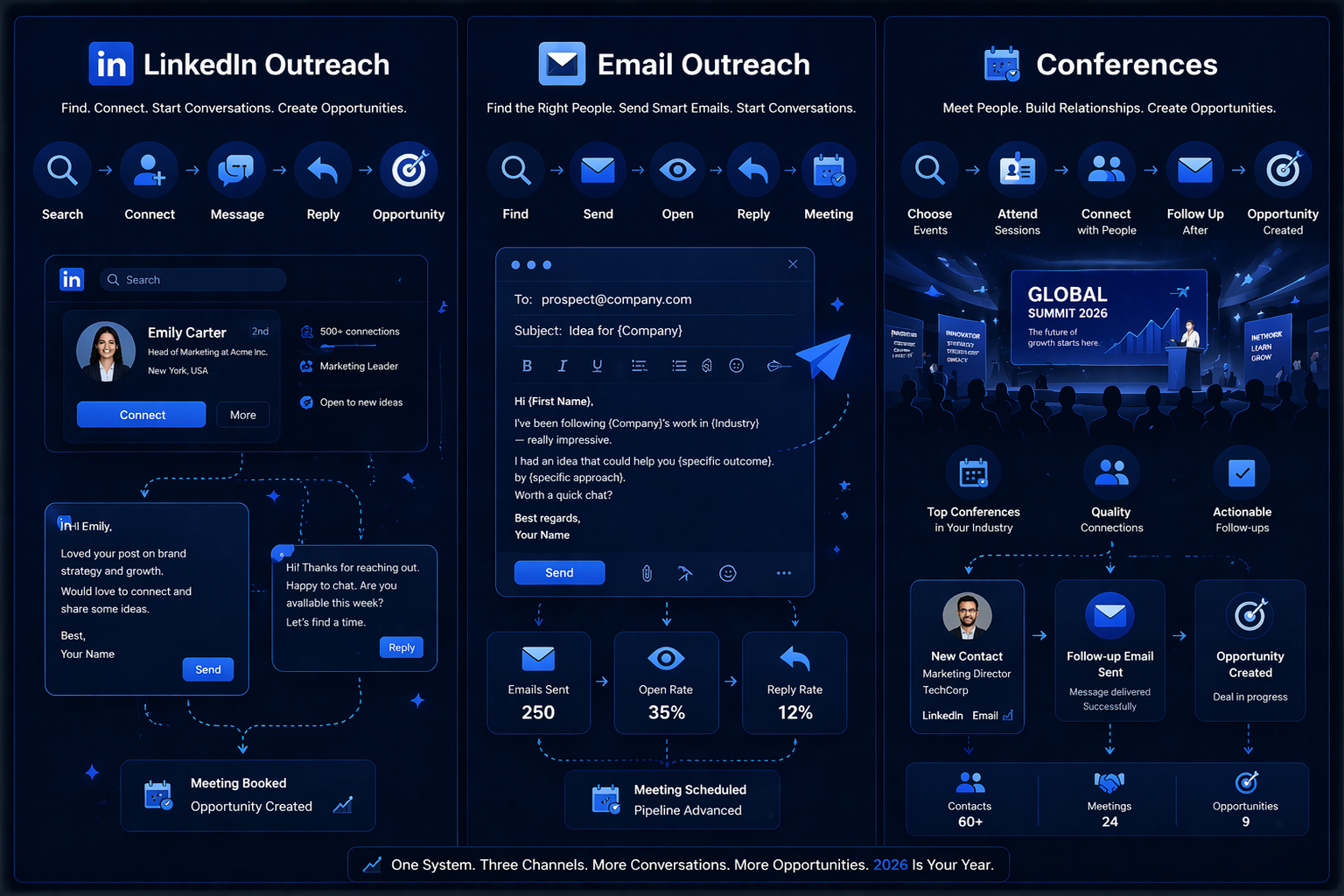
Six B2B lead generation channels produce measurable pipeline in 2026, each serving distinct commercial objectives based on speed requirements, target precision, and growth stage.
LinkedIn outreach
LinkedIn outreach provides direct access to decision-makers with full control over targeting criteria. Companies filter prospects by job title, company size, industry, and geographic location before initiating conversations. This precision makes LinkedIn especially effective for reaching senior executives in specific segments.
The platform's professional context creates higher response rates compared to cold approaches through other channels. Execution quality matters substantially. Personalized messages based on prospect research outperform generic templates by wide margins. In practice, companies that need consistent pipeline often rely on structured LinkedIn outreach systems rather than ad-hoc campaigns.
For a deeper breakdown of how this works, see:
LinkedIn B2B lead generation strategyEmail outreach
Email campaigns deliver scalability that manual LinkedIn outreach cannot match. Sales teams contact hundreds of prospects at once and maintain reasonable personalization through variable fields and segmentation. Email works best when combined with multiple touchpoints across a defined sequence rather than single messages.
The channel requires clean data and tested messaging frameworks to avoid spam filters and maintain domain reputation.
If email is part of your acquisition strategy, this guide explains how to turn it into a predictable channel:
B2B email outreachConferences and events
Industry conferences generate high-intent conversations with prospects already researching solutions. Face-to-face interactions build trust faster than digital channels, especially for complex sales that require multiple stakeholders. Events provide concentrated access to target accounts but require substantial investment in attendance fees, travel, and team time.
The best B2B lead generation techniques at conferences involve pre-event outreach to schedule specific meetings rather than relying on booth traffic alone. Conference outreach becomes significantly more effective when treated as a structured outbound channel rather than networking.
Here's a full breakdown:
Conference lead generation for B2BSEO and content
Organic search attracts prospects actively seeking solutions and creates inbound pipeline without ongoing acquisition costs. Content demonstrates expertise and builds credibility before sales conversations begin. This channel requires consistent publishing and technical optimization over extended periods before it produces reliable lead flow.
Paid acquisition
Paid channels including search ads and sponsored content accelerate visibility but often struggle with B2B economics where customer acquisition costs exceed sustainable thresholds for complex products.
Partnerships and referrals
Referral programs and channel partnerships generate qualified leads through existing trust relationships and produce higher conversion rates than cold outbound approaches.
Which Channels Work Best Depending on Your Stage
Channel selection depends on commercial objectives that change as companies mature. Early-stage businesses require speed and confirmation, growth-stage companies need scalable pipeline systems, and mature organizations coordinate multiple channels simultaneously.
Early-stage: speed and confirmation
Companies in their early stages face distinct constraints that make outbound channels the only viable path to pipeline. These businesses need qualified sales conversations immediately to confirm product-market fit, test messaging frameworks, and prove revenue potential before capital runs out.
LinkedIn outreach and email campaigns deliver meetings within 30 days and provide the feedback loops necessary for iteration. Conferences accelerate confirmation further by concentrating target prospects in single venues where face-to-face conversations reveal objections and buying criteria that digital channels obscure.
Investing in SEO or content marketing at this stage sacrifices critical speed. These inbound channels require six months minimum before they generate consistent pipeline — a timeline that exceeds most early-stage runway assumptions. B2B lead generation strategies for early-stage companies should prioritize outbound channels exclusively until recurring revenue confirms market fit.
Growth-stage: scaling pipeline
Companies in their growth stage shift focus from confirmation to systematic pipeline creation. The outbound channels that proved product-market fit now require operational scaling through dedicated teams, tested sequences, and predictable volume metrics.
Email outreach becomes a numbers game with defined conversion standards at each stage. LinkedIn outreach transitions from founder-led activity to structured programs with specialized sales development representatives.
This stage also marks appropriate timing for inbound investment. Companies possess confirmed messaging, proven customer profiles, and operational capacity to nurture slower-moving prospects. SEO and content initiatives launched now compound alongside scaled outbound efforts.
Mature companies: combining channels
Mature organizations coordinate multiple lead generation channels simultaneously and allocate resources based on proven unit economics rather than experimentation. Outbound channels provide predictable baseline pipeline while inbound efforts multiply reach. Partnerships and referral programs contribute high-conversion opportunities.
The best B2B lead generation techniques at this stage involve coordinated multi-channel campaigns where prospects encounter consistent messaging across LinkedIn, email, content, and events.
Why Outbound Channels Deliver Faster Pipeline
Outbound B2B lead generation channels operate with structural advantages that inbound approaches cannot replicate, regardless of execution quality or budget allocation.
Control over targeting
Outbound channels enable sales teams to define exact prospect criteria before contact begins. Companies select specific industries, revenue ranges, job functions, and geographic markets based on ideal customer profiles rather than attracting whoever discovers content organically.
This precision eliminates the qualification waste inherent in inbound approaches where unqualified prospects consume sales resources. A company selling enterprise software to manufacturing CFOs contacts manufacturing CFOs directly through LinkedIn and email outreach — instead of publishing content and hoping the right people find it. Conversion efficiency improves because targeting happens before outreach rather than during qualification.
Speed of execution
The timeline from campaign launch to qualified meetings represents outbound's most important commercial advantage. Email sequences and LinkedIn outreach campaigns generate initial responses within 48–72 hours of deployment. First meetings occur within two weeks of campaign start.
This speed matters when companies face quarterly pipeline requirements or need to confirm new market segments before committing resources. Inbound B2B lead generation strategies require months of content publication and SEO optimization before producing comparable meeting volume — a delay that makes them unsuitable for immediate pipeline needs.
Predictability of meetings
Outbound volume metrics create forecasting accuracy that inbound channels cannot provide. Companies know that contacting 1,000 qualified prospects with tested messaging produces a calculable number of responses, meetings, and opportunities.
This predictability enables systematic scaling — doubling outreach volume doubles pipeline output when conversion rates remain stable. Sales leaders can forecast pipeline with accuracy levels impossible through inbound channels, where traffic and conversion rates fluctuate based on algorithm changes, seasonal search patterns, and competitive content saturation.
Why Inbound Alone Rarely Works (And When It Does)
Companies pursuing inbound-only B2B lead generation strategies encounter three structural problems that prevent reliable pipeline creation.
Time-to-results reality
Inbound channels require extended development periods before they deliver qualified opportunities. SEO initiatives need six to twelve months of consistent content publication and technical optimization before ranking for commercial keywords. Content marketing demands similar timeframes as domain authority builds and backlinks accumulate.
This delay creates cash flow problems for companies operating on quarterly revenue targets or limited runway. Businesses relying on inbound approaches face pipeline gaps during critical growth phases when investor patience and capital reserves deplete faster than organic traffic builds.
Content saturation problem
Most B2B markets suffer from content oversupply where hundreds of companies publish similar material targeting similar keywords. Breaking through this saturation requires exceptional quality, substantial promotion budgets, or extended time horizons that most companies cannot sustain. Generic content generates negligible traffic regardless of publication volume.
When inbound makes sense
Inbound works after companies establish product-market fit, verify messaging through outbound channels, and build operational capacity for longer nurture cycles. Businesses with proven unit economics, existing customer bases for referrals, and capital to sustain 12-month investment horizons benefit from inbound as a pipeline multiplier rather than a primary source.
How to Combine Channels for Predictable Growth
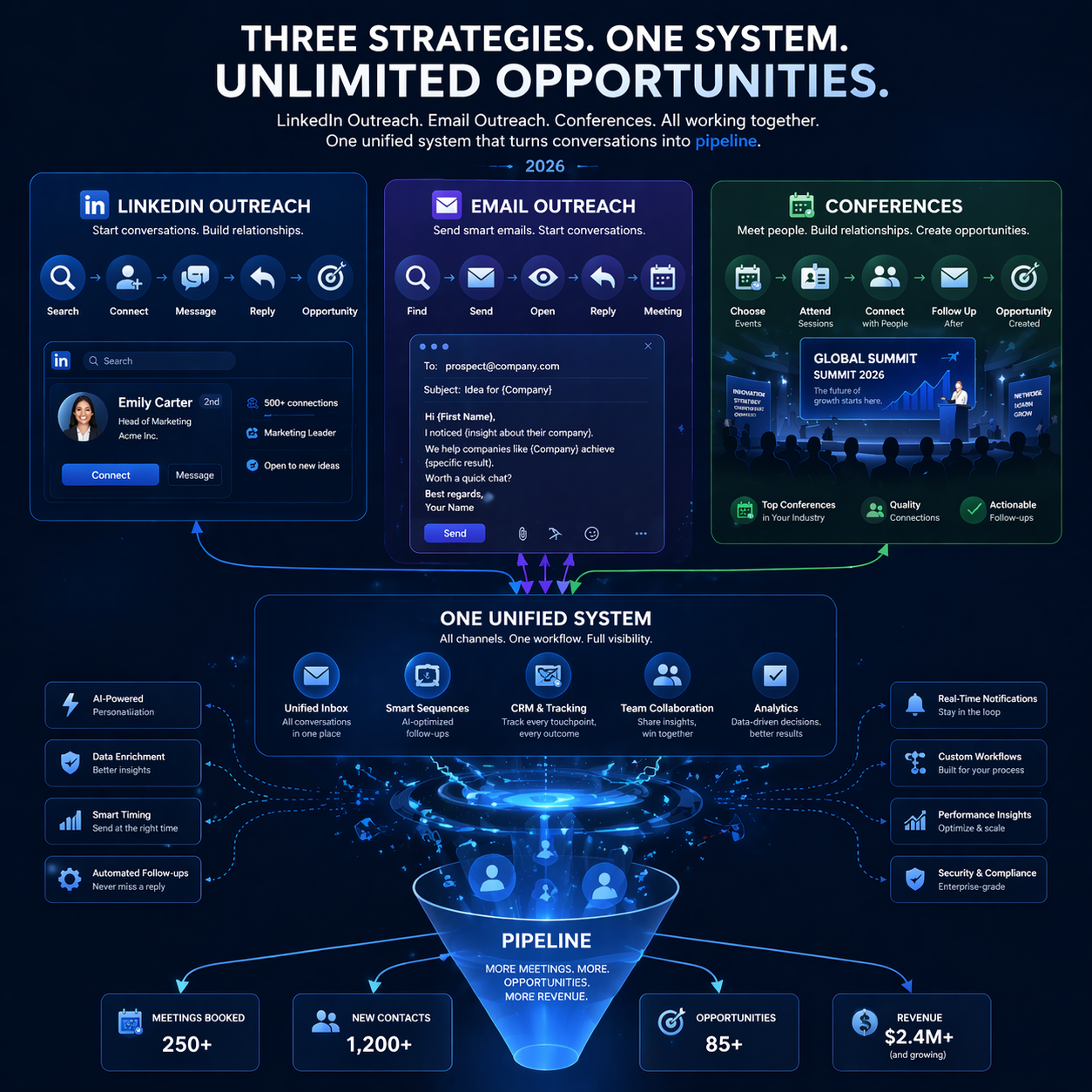
Combining lead generation channels requires careful sequencing rather than parallel investment in all options at once. The best B2B lead generation strategies layer channels based on proven performance at each stage and build sustainable pipeline systems through systematic expansion.
To understand how these channels connect into a structured acquisition system, explore:
How to Build a Predictable B2B Sales PipelineOutbound as foundation
Outbound channels establish baseline pipeline before inbound investments begin. Companies implement LinkedIn and email outreach first. This generates immediate meetings, verifies messaging, and proves unit economics. The foundation provides cash flow and market intelligence that inform subsequent channel decisions.
Outbound conversion data reveals which segments respond and which value propositions resonate. It also surfaces the objections that require addressing through content.
Inbound as multiplier
Inbound channels increase outbound reach after baseline pipeline proves reliable. Content and SEO extend message distribution beyond sales team capacity and attract prospects who research independently. Outbound establishes core messaging and ideal customer profiles. Inbound efforts target proven segments with verified positioning rather than speculative content themes.
Practical allocation model
- Early-stage: 90–100% outbound until achieving consistent monthly pipeline
- Growth-stage: 70% outbound, 30% inbound as content compounds
- Mature: 50–60% outbound, 40–50% inbound — maintaining predictable baseline while scaling passive channels
This progression delivers pipeline velocity during inbound development periods.
Conclusion
Choosing the right channels is only the first step. The real advantage comes from turning them into a structured system that consistently generates qualified meetings.
If you want to build a predictable pipeline using LinkedIn, email, and multi-channel outbound, start here:
How to Build a Predictable B2B Sales Pipeline