
Cold Email Outreach in the EU and UK: Rules, Deliverability and Setup
How to run B2B cold email outreach in Europe and the UK: what GDPR and PECR require, why Germany is stricter, and the deliverability setup that keeps messages in the inbox.
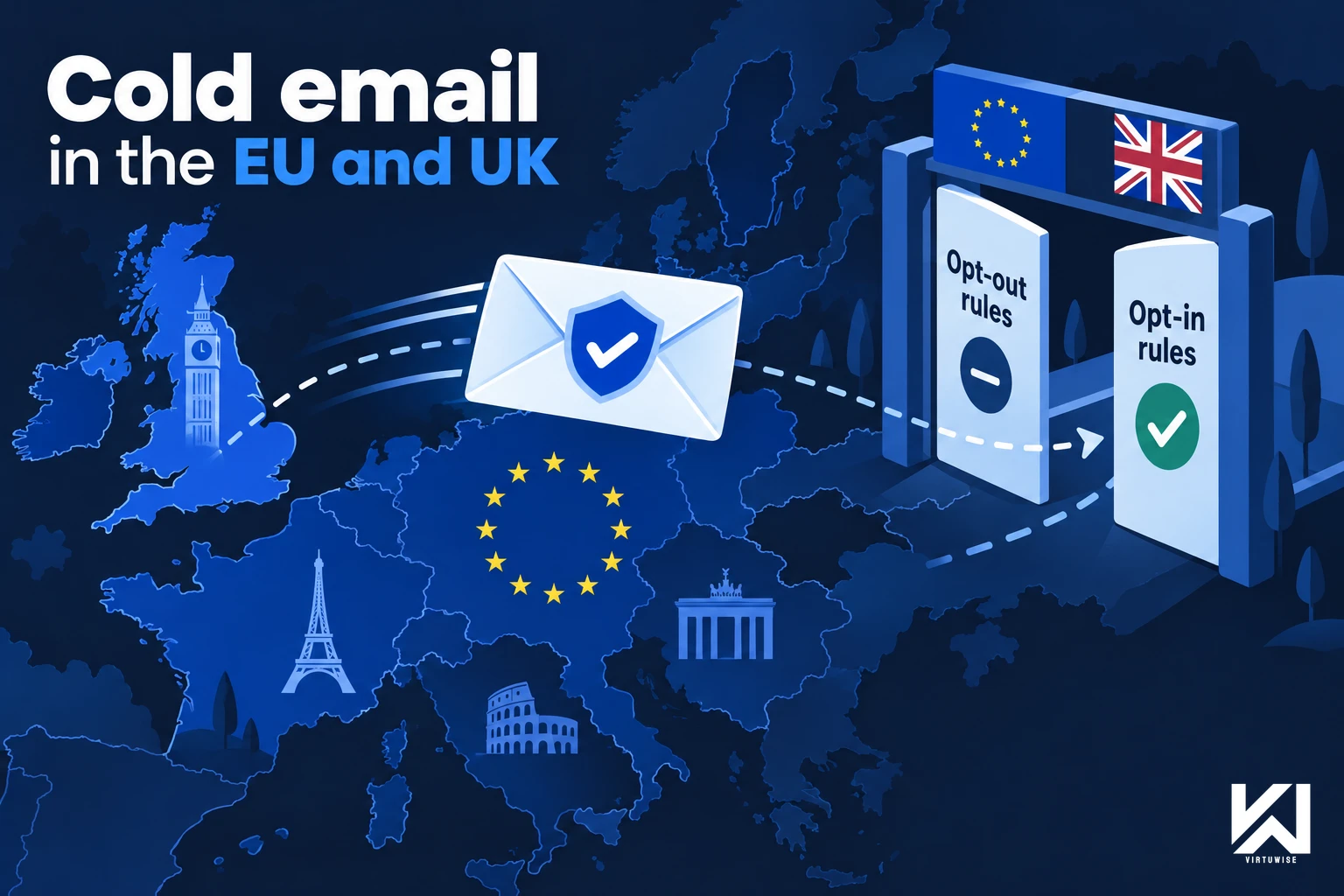
Cold email outreach in the EU and UK is legal in many cases, but the rules differ by country, and the setup behind the message decides whether anyone sees it. In the UK and several EU markets, B2B cold email to company addresses can rely on legitimate interest if it is relevant, identifies the sender and offers a clear opt-out. Germany and Austria are stricter and generally expect prior consent for email marketing. Beyond the law, deliverability (domains, authentication, list quality and volume) determines whether your campaign reaches the inbox at all.
This guide covers both halves: what to check on compliance, and how to set up cold email so it performs. It is general information, not legal advice. Have a qualified lawyer confirm the rules for each market you target.
What the Law Says: The Basics
Two layers of regulation apply to cold email in Europe.
Data protection (GDPR and UK GDPR). Any email address that identifies a person, including a work address such as name@company.com, is personal data. To process it you need a lawful basis. For B2B outreach, companies usually rely on legitimate interest, which requires a documented assessment that your interest is balanced against the recipient's rights. You must also tell people who you are, why you are contacting them and where you got their data, and you must honour objections and opt-outs. Electronic marketing rules (ePrivacy, and PECR in the UK). These govern the act of sending marketing email and are set country by country in the EU. This is where the national differences appear.Country Differences That Matter
| Market | General position for B2B cold email | What to do |
|---|---|---|
| UK | PECR distinguishes between corporate subscribers (limited companies, LLPs, public bodies) and individual subscribers such as sole traders and some partnerships. Corporate addresses can generally be emailed without prior consent; individuals generally need consent | Identify yourself, provide a working opt-out, keep suppression lists, screen out sole traders where you can |
| Germany | Unsolicited email advertising is generally treated as unlawful without prior consent under unfair competition law, including to businesses | Do not rely on cold email for German targets without legal advice. Use LinkedIn or other channels and consent-based approaches |
| Austria | Rules also lean toward prior consent for electronic marketing | Treat like Germany unless counsel confirms otherwise |
| France, Netherlands, Nordics, Baltics, Poland, Bulgaria, Cyprus | National rules vary, and many allow B2B email that is relevant to the recipient's role and offers an opt-out, but conditions differ | Check each country with local counsel before launching a campaign |
This table summarises common positions and simplifies them. Rules and enforcement change, so confirm the current position for every country in your target list.
A Compliant Cold Email Checklist
Whatever the country, these habits reduce risk and improve results:
- Relevance. Contact people whose role relates to what you offer. A message about payments to a head of HR is both ineffective and hard to justify.
- Identify yourself. Real sender name, company and a physical or registered address in the footer.
- Say why you are writing. A short line on how you found them and why the message is relevant.
- Offer a clear opt-out. Honour it immediately and keep a suppression list across all campaigns and domains.
- Record your reasoning. Keep a short legitimate interest assessment and note the source of each list.
- Limit data. Store only what you need and delete what you no longer use.
- Source lists carefully. Ask data providers how contact data was collected, and avoid scraped lists with no clear origin.
Deliverability: Why Good Emails Land in Spam
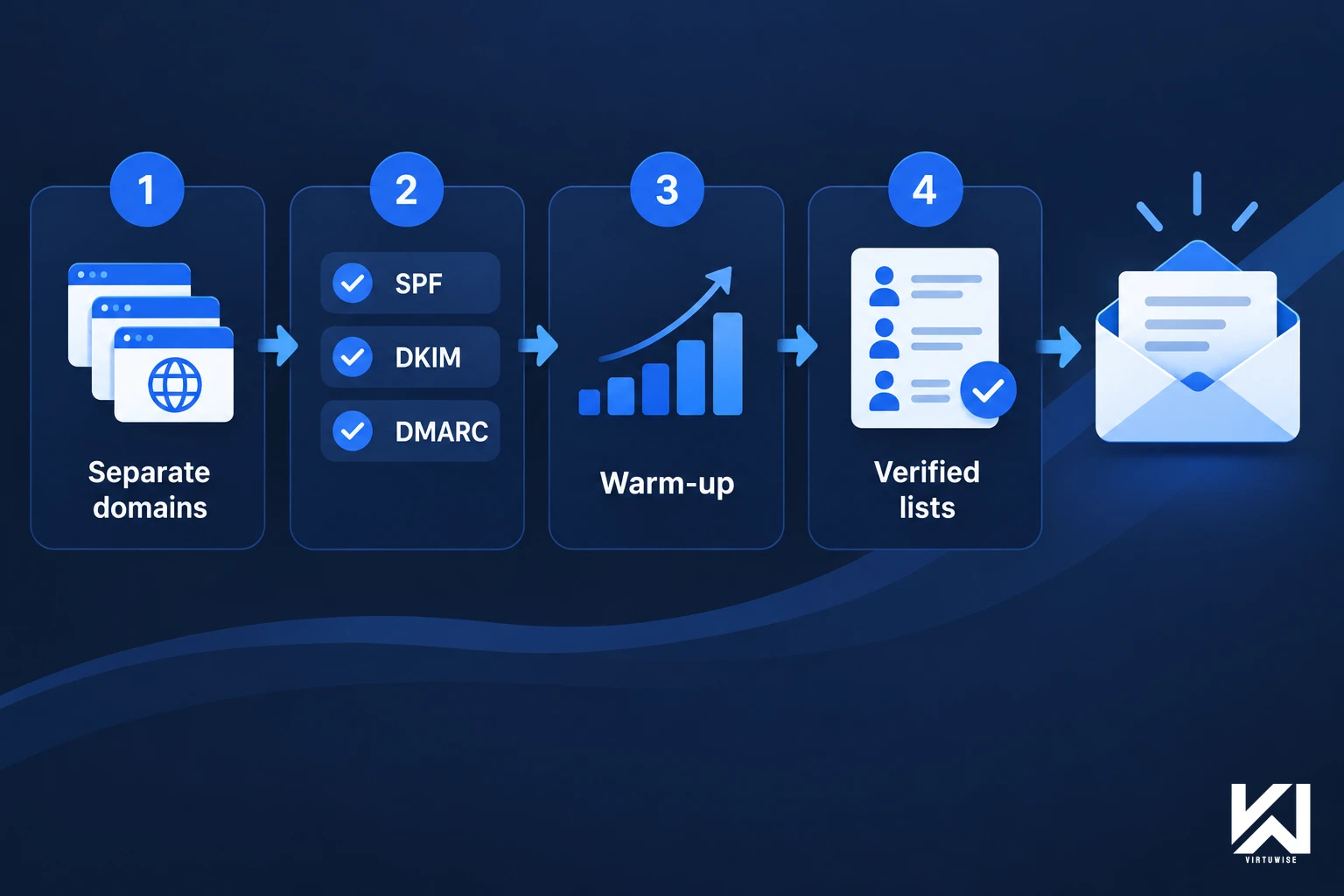
Even a compliant, well-written email fails if mailbox providers treat the sender as suspicious. Deliverability depends on infrastructure and behaviour.
Separate outreach domains. Send cold email from dedicated domains that resemble your brand, not from your main company domain. If an outreach domain is damaged, your regular business email is unaffected. Authentication. Configure SPF, DKIM and DMARC on every sending domain. These records show mailbox providers that the email really comes from you. Mailbox warm-up. New mailboxes need a gradual ramp of activity before sending real volume. Starting at full volume is a common way to burn a domain. Volume per mailbox. Spread sending across several mailboxes with conservative daily limits rather than pushing one mailbox hard. List quality. Verify addresses before sending. High bounce rates damage sender reputation quickly, and so does emailing people who never opted in and mark you as spam. Content and format. Plain, short, text-first emails typically perform better than designed newsletters. Avoid heavy images, many links and spam-trigger phrasing. Monitoring. Track bounce rate, spam complaints and reply rate by domain every week, and pause a domain when the numbers turn.Writing Cold Email That Gets Replies
Deliverability gets you into the inbox; the message decides what happens next.
- Lead with relevance, not with yourself. One sentence about the buyer's situation beats three about your company.
- One clear ask. A short call, a question or a resource, not several options.
- Keep it short. A few lines read easily on a phone.
- Follow up. Most replies come after the first message. A sequence of a few well-spaced follow-ups, each adding something new, outperforms a single email.
- Localise. Language, tone and examples should match the market. German-speaking buyers expect a more formal tone, for example.
For ready-to-adapt wording, see our B2B cold email templates, and for benchmarks see cold email response rates.
Email Is One Channel, Not the Whole Programme
In markets where cold email is restricted, LinkedIn is often the main outbound channel, with email used selectively where it is permitted and where lists are verified. Combining channels also protects you: if one is constrained by rules or deliverability, the other keeps pipeline moving. Our guides to LinkedIn lead generation and email outreach as a revenue channel cover each channel in detail.
Build It In-House or Use a Provider?
Running compliant cold email takes more than writing copy: domain setup, warm-up, list sourcing and verification, suppression handling, reply management and weekly monitoring. Teams with SDR capacity can run it in-house. Teams without it often hand it to a provider.
VirtuWise runs outbound for B2B companies in the EU, UK and US, starting from €3,000 a month with no long-term contracts. We choose channels by market, source and verify lists, run LinkedIn and email sequences, handle replies and report weekly on qualified meetings. See the email outreach service and the full B2B lead generation service for scope.
Frequently Asked Questions
Is cold email legal in the EU?It depends on the country and on who you email. Many markets allow B2B cold email to company addresses when it is relevant, identifies the sender and offers an opt-out, while others, notably Germany and Austria, generally expect prior consent. Data protection law also applies because work email addresses are personal data. Confirm each country with a lawyer.
Is cold email legal in the UK?Under PECR, corporate subscribers such as limited companies can generally be emailed without prior consent, while individual subscribers such as sole traders generally need consent. UK GDPR still applies to the data, so you need a lawful basis (usually legitimate interest), clear identification and an easy opt-out.
Do I need consent for B2B cold email under GDPR?GDPR itself does not require consent for every B2B email. Legitimate interest can be a lawful basis if you document it and balance it against the recipient's rights. National electronic marketing rules may add a consent requirement, which is why countries differ.
How many cold emails can I send per day?There is no universal number. Keep volume per mailbox modest, spread it across several warmed mailboxes and watch bounce and complaint rates. Increase only while those numbers stay healthy.
Why do my cold emails go to spam?Common causes are an unauthenticated or new domain, no warm-up, unverified lists, too much volume from one mailbox and salesy or image-heavy content. Fix infrastructure and list quality before rewriting the copy.
Related reading
- B2B Cold Email Templates — message structures you can adapt for each market
- Cold Email Response Rates: 2026 Benchmarks and How to Beat Them — benchmarks for judging your own campaigns
- 5 Steps to Turn B2B Email Outreach Into a Predictable Revenue Channel — how email fits into a full outbound programme